La Palma · Spain
The green island under dark skies
A steep, forested Canary island of crater rims, laurel woods and black-sand coves, with some of the clearest night skies in Europe.
- Journey time
- 5 h 45 min
- out via Tenerifeback nonstop in 4 h 10 min
- Flights a week
- 3
- on Tuesday, Thursday and Saturday
- Aircraft
- Airbus A321
- 202 seats
- Airport
- La Palma Airport
- SPC
Photo: Mike Peel (www.mikepeel.net) · CC BY-SA 4.0 · Wikimedia Commons
Nature & outdoors · Sun & sea
Discover La Palma
La Palma climbs from black-sand coves to a summit of 2,426 metres, and almost everything about the island follows from that slope. Banana terraces line the coast, Canary pine takes over above them, and the highest ridge stands clear of the sea of cloud that settles against the eastern flank most afternoons. The whole island has been a UNESCO biosphere reserve since 2002, and its people call it La Isla Bonita without irony.
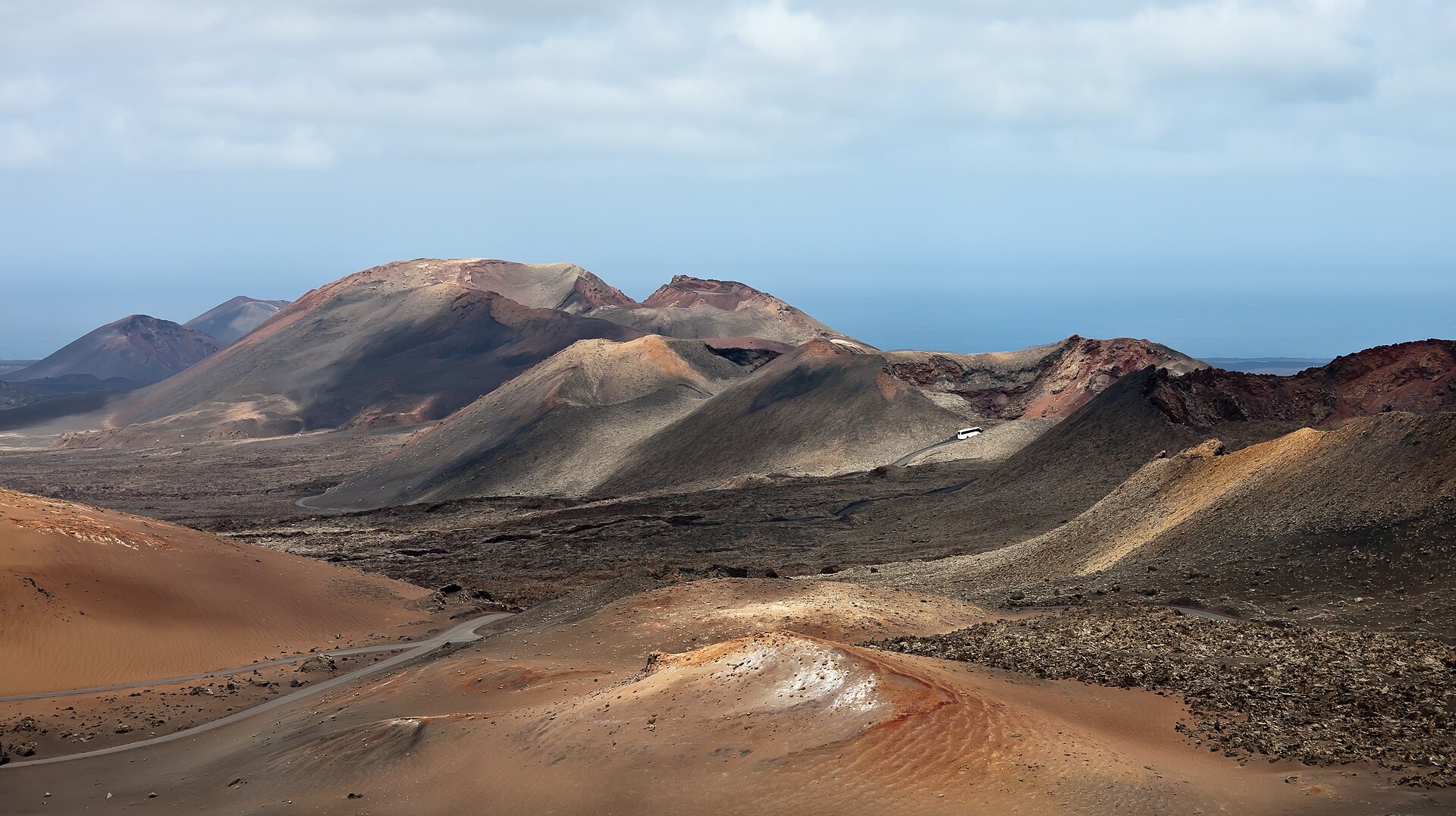
This is an island for walking rather than for lying still. More than 1,000 kilometres of waymarked trails cross it, from the pine-filled crater of the Caldera de Taburiente to the laurel forest of Los Tilos and the lava fields of the Cumbre Vieja ridge, the youngest of them laid down in 2021. Santa Cruz de La Palma, the capital, is small and handsome: cobbled Calle O’Daly, a Renaissance town hall and a seafront row of painted wooden balconies.
After dark the island turns its attention upwards. Outdoor lighting has been regulated by law since 1988 to protect the observatory on the Roque de los Muchachos, and on a clear night the Milky Way is plain to the naked eye. Evenings are for grilled fish in Puerto de Tazacorte, wrinkled potatoes with red and green mojo, smoked goat’s cheese and a glass of Malvasía from Fuencaliente.
La Palma highlights
What to see and do
Caldera de Taburiente
A crater some eight kilometres across, with walls that rise as much as 2,000 metres, protected as a national park since 1954. The viewpoint at La Cumbrecita looks straight in; longer trails follow the stream bed of the Barranco de las Angustias.
Roque de los Muchachos
The island’s highest point, reached by a long road of hairpins. Telescope domes stand along the rim, among them the Gran Telescopio Canarias with its 10.4-metre mirror, and on a clear evening the view takes in Tenerife, La Gomera and El Hierro.
Fuencaliente salt pans and volcanoes
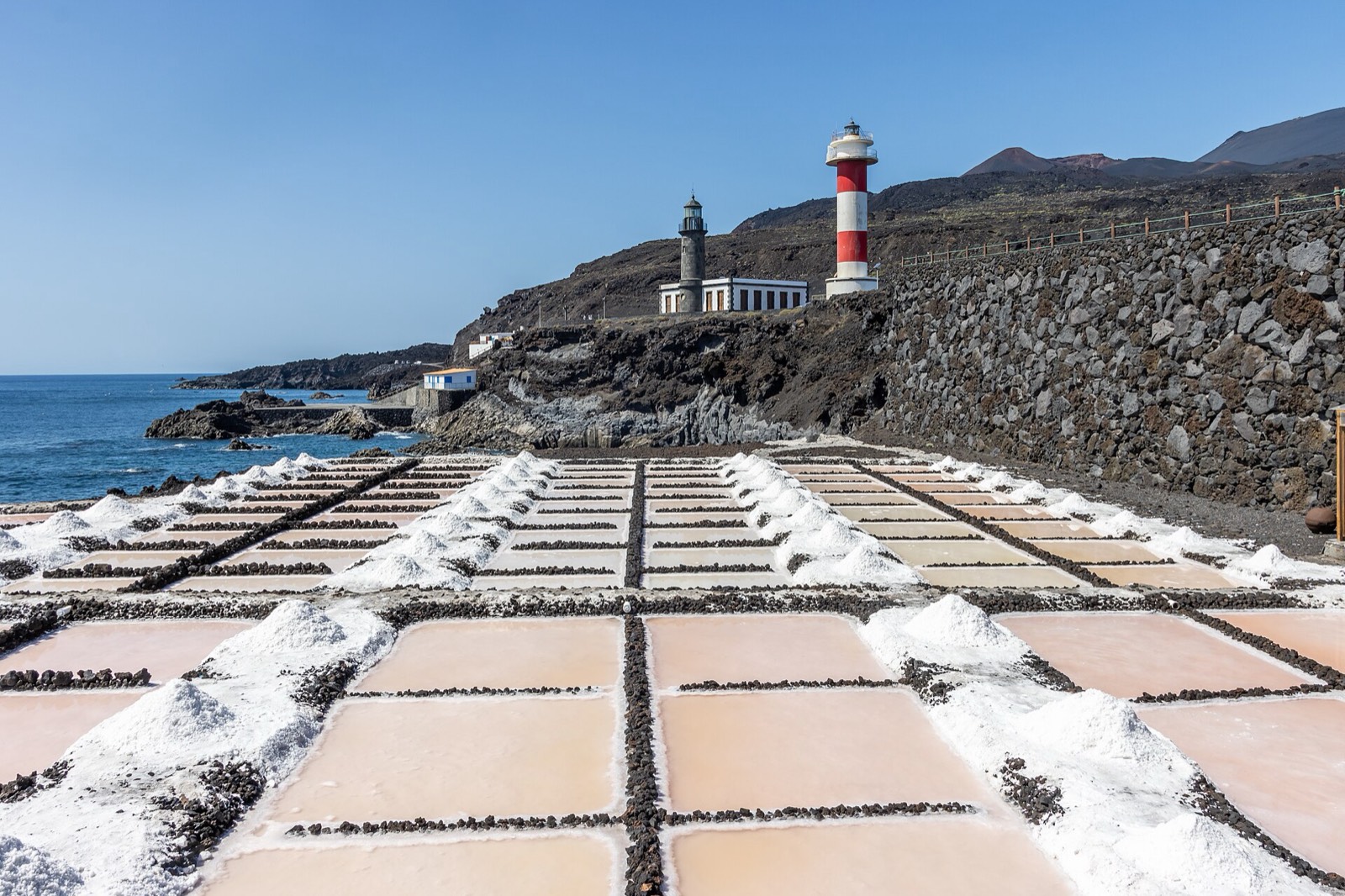
At the southern tip, sea salt is still raked by hand beside two lighthouses, close to where the lava of 1971 met the sea. A marked trail links the rim of the San Antonio volcano with the younger cone of Teneguía.
Santa Cruz de La Palma
The capital keeps its sixteenth-century layout. Walk Calle O’Daly to the Plaza de España and the church of El Salvador, then follow the Avenida Marítima past the old merchants’ houses with their brightly painted wooden balconies, hung with flowers.
Weekly timetable
Flights to La Palma
Operated by the Airbus A321. All times are local; the timetable repeats every week.
Zurich to La Palma
3 flights a week · 5 h 45 min via Tenerife
| Day | Dep.Departs | Arr.Arrives | Flight | TypeAircraft |
|---|---|---|---|---|
| Mon | No flight | |||
| Tue | 06:10 | 10:55 | VE4600 · VE4601via Tenerife | A321 |
| Wed | No flight | |||
| Thu | 06:10 | 10:55 | VE4603 · VE4604via Tenerife | A321 |
| Fri | No flight | |||
| Sat | 06:10 | 10:55 | VE4606 · VE4607via Tenerife | A321 |
| Sun | No flight | |||
La Palma to Zurich
3 flights a week · 4 h 10 min
| Day | Dep.Departs | Arr.Arrives | Flight | TypeAircraft |
|---|---|---|---|---|
| Mon | No flight | |||
| Tue | 11:45 | 16:55 | VE4602 | A321 |
| Wed | No flight | |||
| Thu | 11:45 | 16:55 | VE4605 | A321 |
| Fri | No flight | |||
| Sat | 11:45 | 16:55 | VE4608 | A321 |
| Sun | No flight | |||
How we fly to La Palma
There is no nonstop flight from Zurich to La Palma. The journey out calls at Tenerife, where the flight to La Palma leaves 50 min after landing.
The flight back to Zurich is nonstop.